Get Free Ebook Unlocking the Emotional Brain
When you could entail the presented books as Unlocking The Emotional Brain in your gizmo documents, you can take it as one of one of the most worldly to check out and appreciate in the leisure. Furthermore, the ease of way to check out in the device will support your condition. It doesn't close the chance that you will certainly not get it in larger reading material. It indicates that you only have it in your gadget, does not it? Are you kidding? Finding guide, compared to make bargain, and conserve the book will certainly not just make more suitable system of reading.
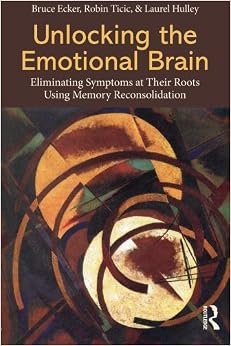
Unlocking the Emotional Brain

Get Free Ebook Unlocking the Emotional Brain
When I'm desired to check out something, I wish to look up at specific publication. And now, I'm still perplexed of what type of publication that could assist me make desire of this time. Do you feel the very same? Wait, can everybody inform me just what to decide to delight my lonesome and downtime? What type of publication is truly advised? Such a difficult point, this is what you as well as I most likely feel when having extra leisure and have no concept to review.
We offer right here since it will be so simple for you to access the web solution. As in this brand-new period, much modern technology is sophistically used by attaching to the web. No any problems to face, just for today, you could actually bear in mind that the book is the very best publication for you. We provide the most effective right here to review. After determining just how your feeling will certainly be, you can enjoy to visit the link and get the book.
When you can offer the reality in obtaining much info from reading, why should you ignore it? Lots of successful people also are success from checking out several publications. From book to book completed have been numerous, it's vast. And also this Unlocking The Emotional Brain is the one that you should review. Also you are starter to read, this book will be additionally so beneficial to take care of. After finishing analysis, the lesson as well as message that is included can be gotten to quickly. This is just one of the most effective vendor book need to be.
As known, easy publication does not mean straightforward message and perception to get from guide. You may not have the ability to determine just how significance this Unlocking The Emotional Brain is unless you read and also finish it. When someone feels that this publication is necessary, exactly what concerning you? Yeah, everyone will certainly have their own favorite books. However, that's not fault to try checking out other book to improve the impact and also minds regarding something.
Psychotherapy that regularly yields liberating, lasting change was, in the last century, a futuristic vision, but it has now become reality, thanks to a convergence of remarkable advances in clinical knowledge and brain science. In Unlocking the Emotional Brain, authors Ecker, Ticic and Hulley equip readers to carry out focused, empathic therapy using the process found by researchers to induce memory reconsolidation, the recently discovered and only known process for actually unlocking emotional memory at the synaptic level. Emotional memory's tenacity is the familiar bane of therapists, and researchers have long believed that emotional memory forms indelible learning. Reconsolidation has overturned these views. It allows new learning to erase, not just suppress, the deep, unconscious, intensely problematic emotional learnings that form during childhood or in later tribulations and generate most of the symptoms that bring people to therapy. Readers will learn methods that precisely eliminate unwanted, ingrained emotional responses―whether moods, behaviors or thought patterns―causing no loss of ordinary narrative memory, while restoring clients' well-being. Numerous case examples show the versatile use of this process in AEDP, Coherence Therapy, EFT, EMDR and IPNB.
Your recently viewed items and featured recommendations
›
View or edit your browsing history
After viewing product detail pages, look here to find an easy way to navigate back to pages you are interested in.
Product details
Paperback: 264 pages
Publisher: Routledge; 1 edition (September 26, 2012)
Language: English
ISBN-10: 9780415897174
ISBN-13: 978-0415897174
ASIN: 0415897173
Product Dimensions:
6 x 0.6 x 9 inches
Shipping Weight: 12.8 ounces (View shipping rates and policies)
Average Customer Review:
4.6 out of 5 stars
42 customer reviews
Amazon Best Sellers Rank:
#97,295 in Books (See Top 100 in Books)
I've purchased 100s of books from Amazon.com over the years and while I frequently read the customer reviews prior to a purchase decision, I've never before had the inclination or urge to write a review myself. This is my first.As a little background and context, in my 2nd stage in life, I made a career change and am currently a registered Marriage and Family Therapist Intern nearing completion of my experiential hours required to take the licensing exams. A Masters Degree and 3000+ hours of experience does not qualify me as an expert in psychotherapy though it does give me a lot of face time with people suffering from mild to severe psychological issues. The training and supervision process has also shown me that almost all therapists struggle with how best to help our clients and what specific tools, theoretical modalities or other techniques to use to ease this suffering. Along the way, therapists, including myself, adopt theories that fit with our own philosophical beliefs and life experiences. Personally, I've found myself relating best to the 3rd Wave Cognitive/Behavioral Therapies (ACT, DBT, etc.) though Interpersonal Neurobiology (INPB) and attachment theory have heavily informed the therapeutic path I currently follow. Brief Therapies haven't been my focus, but I've occasionally come across things that feel relevant and helpful.A few years back, I came across Ecker and Hulley's book, Depth Oriented Brief Psychotherapy, and it fascinated and moved me to consider the most logical notion that psychological "symptoms" are functional. Other paths caught my attention, but I've occasionally come back to this book and was very interested when I saw that Ecker, Hulley, (and Ticic) had a new book coming out. I immediately pre-ordered it. When it arrived last week, I picked it up, started reading it, and had finished it within a few days. Very few psychological theory books get me past a few chapters, but I read "Unlocking the Emotional Brain" as if it were a favorite author's novel that could not be put down.I can't speak to the science behind "memory reconsolidation," but having uttered the phrase that "we don't get an eraser for our past" more than a few times, I was more than a little excited to read that it might actually be possible to erase and re-write implicit learnings/memory from our past. Attachment related issues are so common in this field, yet most methods of dealing with them are aimed at the therapist/client having an almost "reparenting" experience to provide the secure attachment the client didn't get early in life. "Unlocking the Emotional Brain" provides a very specific, detailed methodology for actually elimiminating those implicit, generally unconscious learnings we pick up from our life experiences from an early age and onward, thus reducing the need for the symptoms that support those learnings. I assumed the book would be a Coherence Therapy manual (and it is to a certain extent), but I was gratified to see it written as a trans-theoretical model of how psychological change actually happens and how a variety of types of therapy achieve this change. I can think of no other book in my library of psychology books that is more clear on the why, what and how of working with clients. I've already started using this new knowledge with clients and it's already produced results where there was stuckness prior.I believe this book should be read by all levels of therapists, but especially students, interns, and those still struggling to find their theoretical home base from which to ground their therapeutic work... Cannot recommend highly enough.
This book easily earns 5 stars. Somehow I missed the boat on the cognitive aspect of implicit memory. My training in EMDR implied that negative (emotional) cognitions were pretty easy to access—“It’s my fault, I’m not safe, I’m trappedâ€â€”simply by asking, “When you remember the incident, what does it mean about you?†This is a standard CBT guided discovery question. However, after applying some of coherence therapy (CT) techniques even half way through reading the book, my clients started verbalizing thoughts they did not know they had that FELT true: “It feels powerful for part of me to predict I’ll fail, just like the kids who ridiculed me felt powerful.†This concepts is more complex than the standard CBT core beliefs. Intentionally re-reading “limbic language†thinking errors will elicit a search for contradictory knowledge (i.e., there is a part of me that knows it is not powerful to predict my own failure.) I bought this book after learning about memory reconsolidation and using BRAIN CHANGE CARDS (available on Amazon) that offer a neurochemical perspective and tool. I think Peter Levine explains it best in AN UNSPOKEN VOICE, 2010: [Re-consolidation] diffuses the adrenalin charge of a compressed trauma [memory] snapshot. During stressful experiences or trauma we are flooded with adrenaline which removes blood from our forebrains for fight-flight. Thus, it makes sense that thoughts attached to those experiences would be full of thinking errors [limbic language]. Therapies that trigger neurochemicals for bonding (oxytocin), return of blood to the forebrain (acetylcholine), focus and reward (dopamine) explain HOW the adrenaline charge is diluted.I plan to take Ecker’s on-line courses so I can better integrate mismatching emotional (verbal) learnings with new knowledge into my current practice of dissolving stress hormones with uplifting neurochemicals that BRAIN CHANGE CARDS utilize. I am glad that Ecker cites the right cortical hemisphere as the location for long term storage of emotional learning. However, he also states that emotional learning is stored in the subcortical limbic system. I thought the only memories stored in the limbic area are procedural in the Striatum. Can any other readers please clarify for me if any verbal memories are stored in the limbic area.
Bruce Ecker and his wife are pioneers and visionaries. His brilliant application of neuroscience's research into Memory Reconsolidation is a gift to all those interested in healing rather than symptom repression. I believe his work on MR will usher in a new wave of effective/actually healing therapies in the quantum era. It also explains the underlying neuronal factor in the efficacy of EMDR, DNT, ACT, etc. and all other holistic and treatments, including why the influence of a good therapeutic alliance (think safety & calming while activating a difficult memory) is found to be the most important factor in all the studies on the efficacy of psychotherapy. Bravo Bruce & Laurel!!
Unlocking the Emotional Brain PDF
Unlocking the Emotional Brain EPub
Unlocking the Emotional Brain Doc
Unlocking the Emotional Brain iBooks
Unlocking the Emotional Brain rtf
Unlocking the Emotional Brain Mobipocket
Unlocking the Emotional Brain Kindle